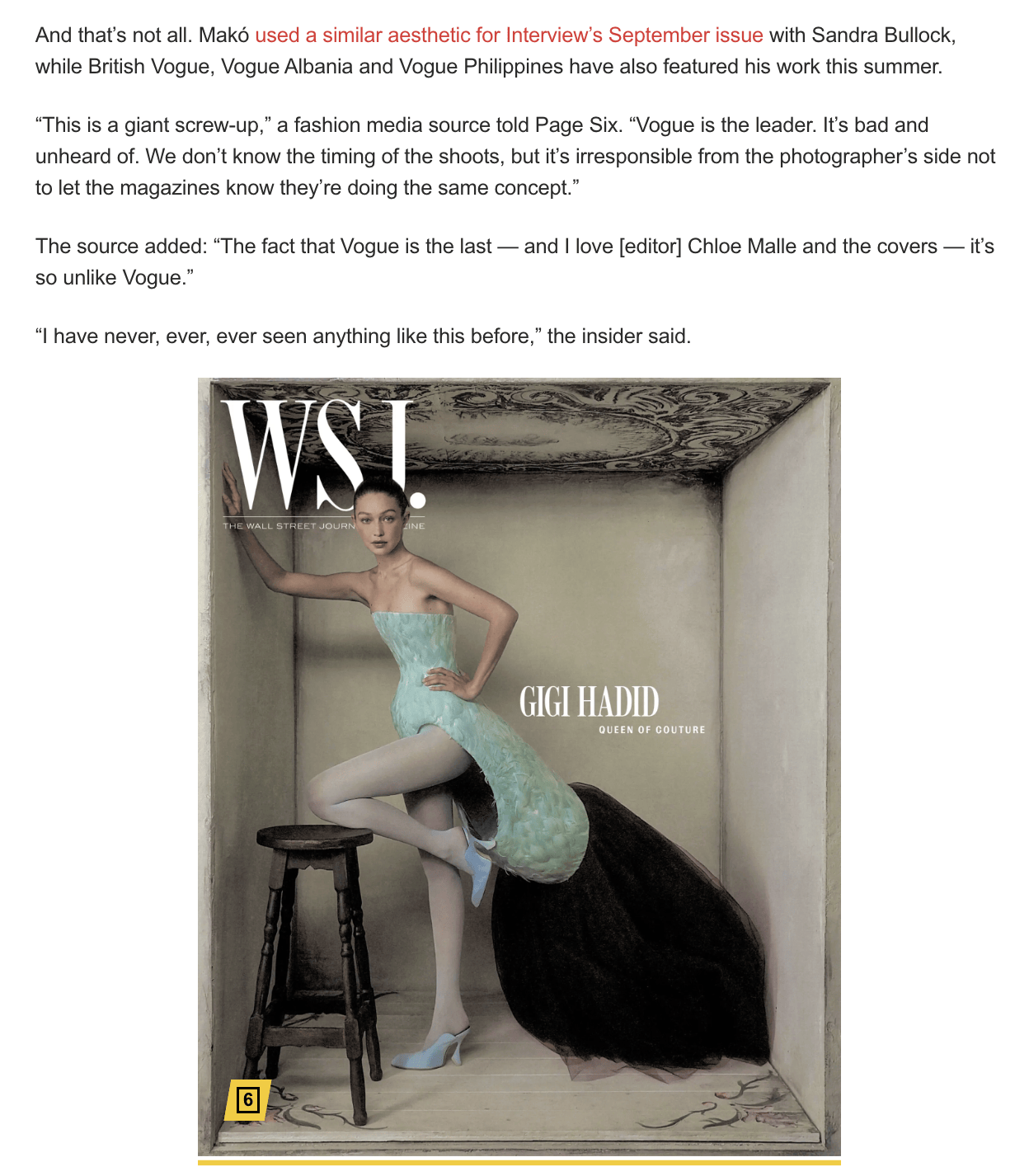
The fashion world is abuzz with the recent phenomenon of several high-profile magazines showcasing strikingly similar covers and editorials, all bearing the distinctive style of photographer Szilveszter Makó. This trend has ignited a lively debate among industry insiders and enthusiasts alike, raising questions about creativity, exclusivity, and the dynamics between artists and publications.
The Makó Aesthetic: A Double-Edged Sword
Szilveszter Makó’s photography is renowned for its painterly quality, surreal props, and a unique mood that captures the essence of the late 2020s. His work has been described as 'static, desaturated, stoic, and formal—perfect for the post-pandemic era.' However, the recent surge in his commissions has led to a noticeable overlap in his shoots, with multiple magazines featuring nearly identical backdrops, lighting, and even wardrobe choices, such as a Balenciaga dress appearing across different publications.
One observer notes, 'His photos are very painterly and I like the prop work. They’re interesting and surreal and very different than what we’ve been seeing.' Yet, another critic points out, 'It just feels like editors are not understanding the right take away from his popularity—the people are yearning for creativity, not exclusively his vision.'
The Role of Magazines: Trendsetters or Followers?
The core issue, many argue, lies not with Makó but with the magazines themselves. By hiring him without securing exclusivity or pushing for distinct creative directions, publications risk appearing unoriginal. As one commenter puts it, 'It’s a slap to all young artists that have to beg for little stories to start their career and won’t be considered unless they’ve already shot all the big magazines.'
Another perspective highlights the homogenization of fashion media: 'Emperor has no clothes moment where these magazines are really highlighted as no longer being the trendsetters that they used to be. Everybody in that industry is just chasing clicks instead of trying to create art.'
Makó’s Responsibility: Artist or Businessman?
While some defend Makó’s right to accept as many commissions as he pleases, others argue that he could have managed the situation better. 'He could have let them know and then would have booked him for a diff issue or like rearranged their time frame,' suggests one commenter. Another adds, 'It shows a lack of biz awareness. Does that matter or is important to him? Maybe not.'
However, many reject the notion that Makó is at fault. 'Let the artist art,' one supporter declares, emphasizing that magazines hired him for his signature style and should not be surprised by the results. Another quips, 'Lol @ the magazines, with their resources and reach, being salty that they seem like they’re following the bandwagon when…. they literally were?'
The Bigger Picture: Creativity in a Saturated Industry
The Makó phenomenon has sparked broader conversations about the state of creativity in fashion media. 'I would love to see what other photographers have to offer with such a specific vision, we know they’re out there,' one enthusiast remarks. Another reflects, 'It’s actually highly poetic for our current society. Everyone thinks they’re original and entitled to an elite level of “specialness”.'
Despite the criticism, there’s no denying the appeal of Makó’s work. 'They’re all stunning and I’m happy for his success,' one fan admits, though adding, 'It would be nice to see the magazines use him in a way that feels thought about and intentional rather than just striking while the iron is hot.'
In the end, the Makó effect serves as a mirror to the fashion industry’s current priorities. Are magazines truly committed to fostering creativity, or are they content to ride the wave of popular trends? As one observer aptly sums it up, 'It’s like a chef being consulted to reimagine multiple high-end restaurant menus and he gives them all the same menu.' The question remains: who’s to blame, and what does this mean for the future of fashion media?